More Canadians are hitting a financial breaking point. If your debt has become unmanageable, two legal options usually come up: a consumer proposal or bankruptcy. Both can stop collection calls and give you a fresh start, but they affect your credit very differently.
The numbers show why this question is so common right now. Canada recorded 37,523 consumer insolvencies in the second quarter of 2026, the highest quarterly total since 2009, according to Office of the Superintendent of Bankruptcy data. That followed a record-setting first quarter reported by CAIRP.
The short answer
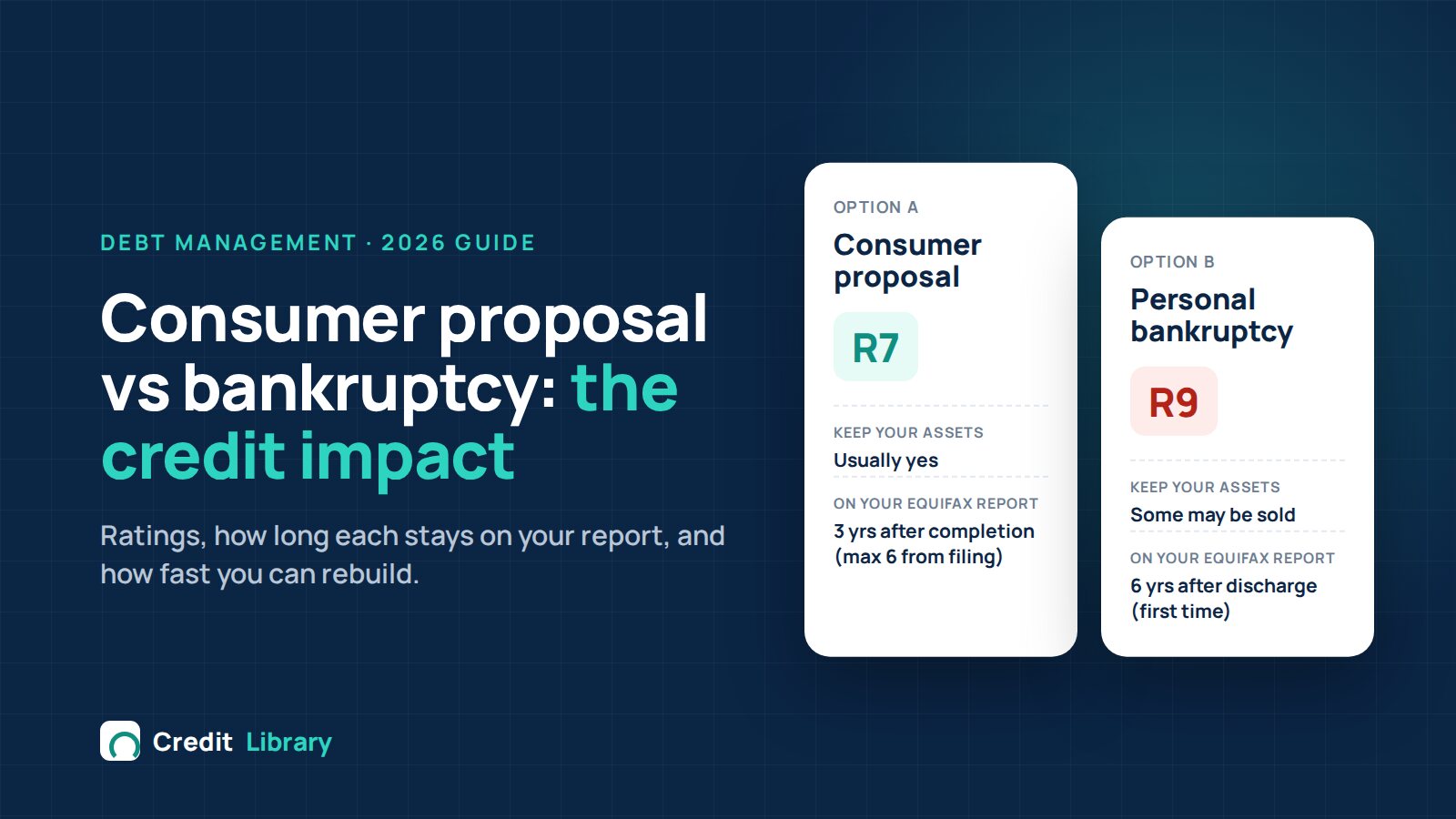
A consumer proposal is usually easier on your credit than bankruptcy. It carries an R7 rating instead of R9, you typically keep your assets, and it can come off your credit report sooner. Bankruptcy can clear debt faster and cost less overall, but it leaves a heavier mark that lasts longer.
What is a consumer proposal?
A consumer proposal is a legally binding deal with your unsecured creditors, filed under the Bankruptcy and Insolvency Act. A Licensed Insolvency Trustee (LIT) helps you offer to repay a portion of what you owe, over a maximum of five years.
- Available if your unsecured debts (not counting a mortgage on your home) are $250,000 or less.
- Creditors vote on the offer. If it’s accepted, the rest of the included debt is forgiven once you finish.
- Interest stops, and collection calls, lawsuits and wage garnishments are generally halted once you file.
- You usually keep your home, car and other assets, as long as you keep up with any secured loans.
- If you fall three payments behind, the proposal can be annulled and your creditors can pursue the full balance again.
What is personal bankruptcy?
Bankruptcy is a legal process where you hand over certain non-exempt assets to a Licensed Insolvency Trustee, and most of your unsecured debt is eliminated. Each province sets rules about which assets are exempt.
- A first-time bankruptcy usually ends in automatic discharge after 9 months, or 21 months if your income is high enough that you must pay surplus income.
- You make monthly payments to the trustee during the bankruptcy and must attend two financial counselling sessions.
- A second bankruptcy lasts longer, generally 24 or 36 months, and stays on your credit report much longer.
- Some assets, such as home equity above provincial exemptions, may need to be sold or paid out.
Consumer proposal vs bankruptcy: side by side
| Consumer proposal | Bankruptcy | |
|---|---|---|
| Credit rating | R7 | R9 (lowest) |
| What you repay | A negotiated portion of your debt | Required payments plus any non-exempt assets |
| How long it lasts | Up to 5 years (can be paid off early) | 9 or 21 months for a first bankruptcy |
| Keep your assets? | Usually yes | Some may need to be sold or paid out |
| Creditor approval | Needed (creditors vote) | Not needed |
| On your Equifax report | 3 years after completion or 6 years from filing, whichever comes first | 6 years after discharge (first bankruptcy) |
| Who can file it | A Licensed Insolvency Trustee | A Licensed Insolvency Trustee |
How each affects your credit score
Canadian credit reports use an “R” rating on revolving accounts, from R1 (paid as agreed) to R9 (bad debt, placed for collection or bankruptcy). Debts included in a consumer proposal are typically shown as R7, a rating that means you’re paying through a formal arrangement. Debts included in a bankruptcy are shown as R9.
Either way, expect a significant drop in your score, especially if your credit was in good shape before. The public record note and the affected accounts both weigh on your score until they’re removed. The good news: your score can start to recover as soon as you add new, positive history.
How long each stays on your credit report
This is where the two options differ most. According to Equifax Canada:
- Consumer proposal: removed 3 years after you complete it, or 6 years from the date you filed, whichever comes first.
- First bankruptcy: removed 6 years after your discharge date (or 7 years from filing if there’s no discharge date).
- Second bankruptcy: both bankruptcies stay for 14 years after their discharge dates.
TransUnion uses similar rules for proposals. Its bankruptcy timelines can vary by province, so check both reports.
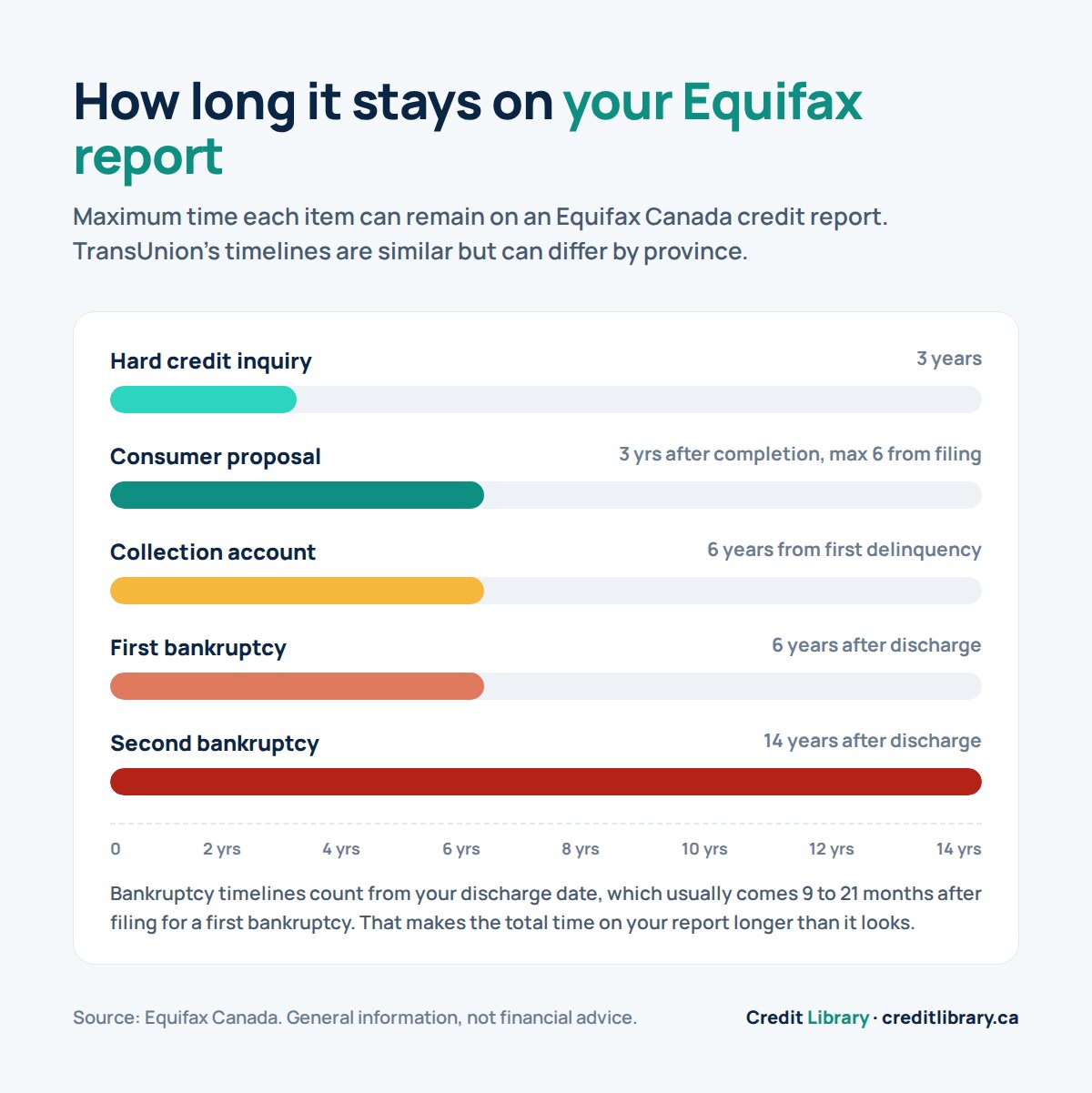
Years on your Equifax report, counted from filing
How to rebuild your credit after a proposal or bankruptcy
A rebuilding plan
Check both credit reports
Once you’re finished, get your free Equifax and TransUnion reports and make sure included debts show a zero balance and the right status.
Open a secured credit card
A secured card is backed by your deposit, so it’s often available even right after filing. Use it lightly and pay in full every month.
Keep utilization low
Try to keep your balance well under 30% of your limit. Here’s how credit utilization works.
Add more positive history
A small credit-builder loan or rent reporting can add on-time payments to your file.
Be patient and consistent
Many people see meaningful improvement within two to three years of completing a proposal or being discharged.
Alternatives to consider first
A proposal or bankruptcy is a big step. Before you file, it’s worth ruling out options that are easier on your credit:
- Talk to your lenders. Some will lower your rate, pause payments or set up a hardship plan.
- A debt consolidation loan or balance transfer. If your credit is still decent, rolling high-interest debt into one lower-rate payment can work. Compare options in our debt consolidation guide.
- A debt management plan. Non-profit credit counselling agencies can negotiate lower interest with creditors, though this can also be noted on your credit report.
Which option is right for you?
A consumer proposal often makes sense if you have steady income, assets you want to protect (like home equity), and can afford a monthly payment. A bankruptcy may make more sense if your income is low, you have few assets, and a proposal payment wouldn’t be realistic.
The right choice depends on your income, assets, debts and province. A Licensed Insolvency Trustee can walk you through both options in a free consultation, so you can decide with the full picture.
Frequently asked questions
Is a consumer proposal better than bankruptcy for your credit?
Generally, yes. A consumer proposal is rated R7 on your credit report, while bankruptcy is rated R9, the lowest rating. A proposal also often comes off your report sooner, especially if you finish paying it early. Both still have a major impact, so neither should be taken lightly.
How long does a consumer proposal stay on your credit report?
With Equifax Canada, a consumer proposal is removed three years after you complete it or six years from the date you filed, whichever comes first. TransUnion uses a similar rule. That means paying your proposal off early can shorten the time it stays on your report.
How long after bankruptcy can I get a credit card?
Many people can get a secured credit card soon after filing or shortly after discharge, since it’s backed by your own deposit. Unsecured cards usually become easier to get after a year or two of on-time payments on new credit.
Can I get a mortgage after a consumer proposal?
Yes, but you’ll usually need to rebuild first. Many lenders look for the proposal to be completed and discharged, followed by about two years of re-established credit with on-time payments. Some alternative lenders may consider you sooner, often at higher rates.
Will my consumer proposal or bankruptcy affect my spouse’s credit?
Not directly. Credit reports are individual. Your spouse’s credit is only affected if they co-signed or share joint debts that are included in your filing, in which case creditors can still pursue them for the balance.
What debts can’t be included in a consumer proposal or bankruptcy?
Common exceptions include child and spousal support, court fines, debts from fraud, and student loans if you left school less than seven years ago. Secured debts like a mortgage or car loan generally continue as long as you keep paying them.
This article is general information, not legal or financial advice. Insolvency rules and credit bureau policies can change and vary by province; speak with a Licensed Insolvency Trustee about your situation. Last reviewed September 2026.