Canada is finally building an official open banking system, and it could change how you qualify for credit. If you’ve ever been turned down for a card or loan because of a thin credit file, or handed your online banking password to a budgeting app, open banking in Canada is worth understanding.
Here’s what open banking is, where the rollout stands in 2026, and what it could mean for your credit, loans and financial privacy.
What is open banking?
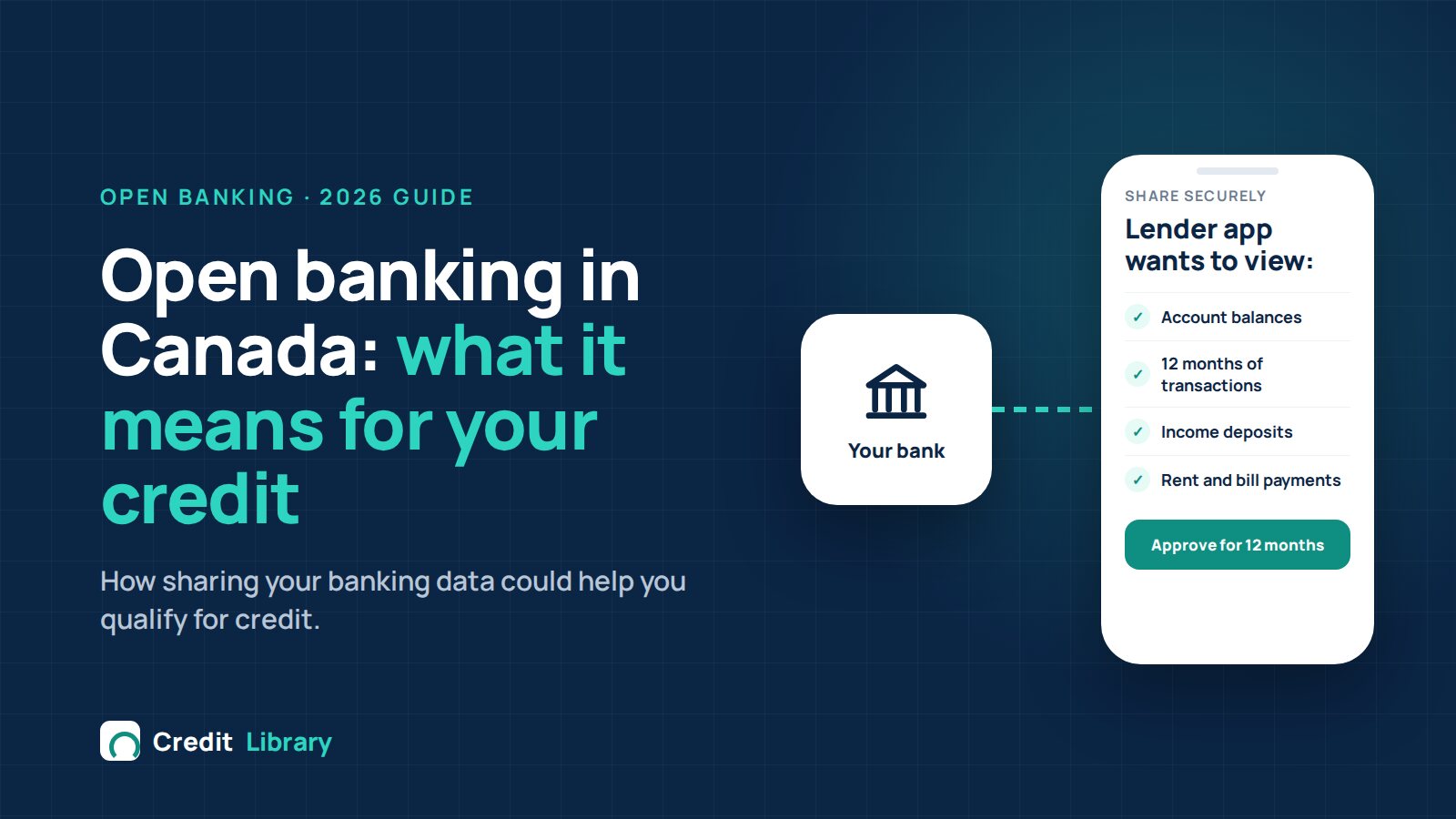
Open banking, called consumer-driven banking in Canada, gives you the right to share your own financial data, like balances and transactions, with apps and companies you choose. The data moves through secure, standardized connections (APIs) instead of the app logging in to your bank as you.
Right now, an estimated nine million Canadians share their financial data through “screen scraping,” where you give an app your online banking username and password, according to the Department of Finance. That creates security, privacy and liability risks that open banking is designed to fix.
Where open banking stands in 2026
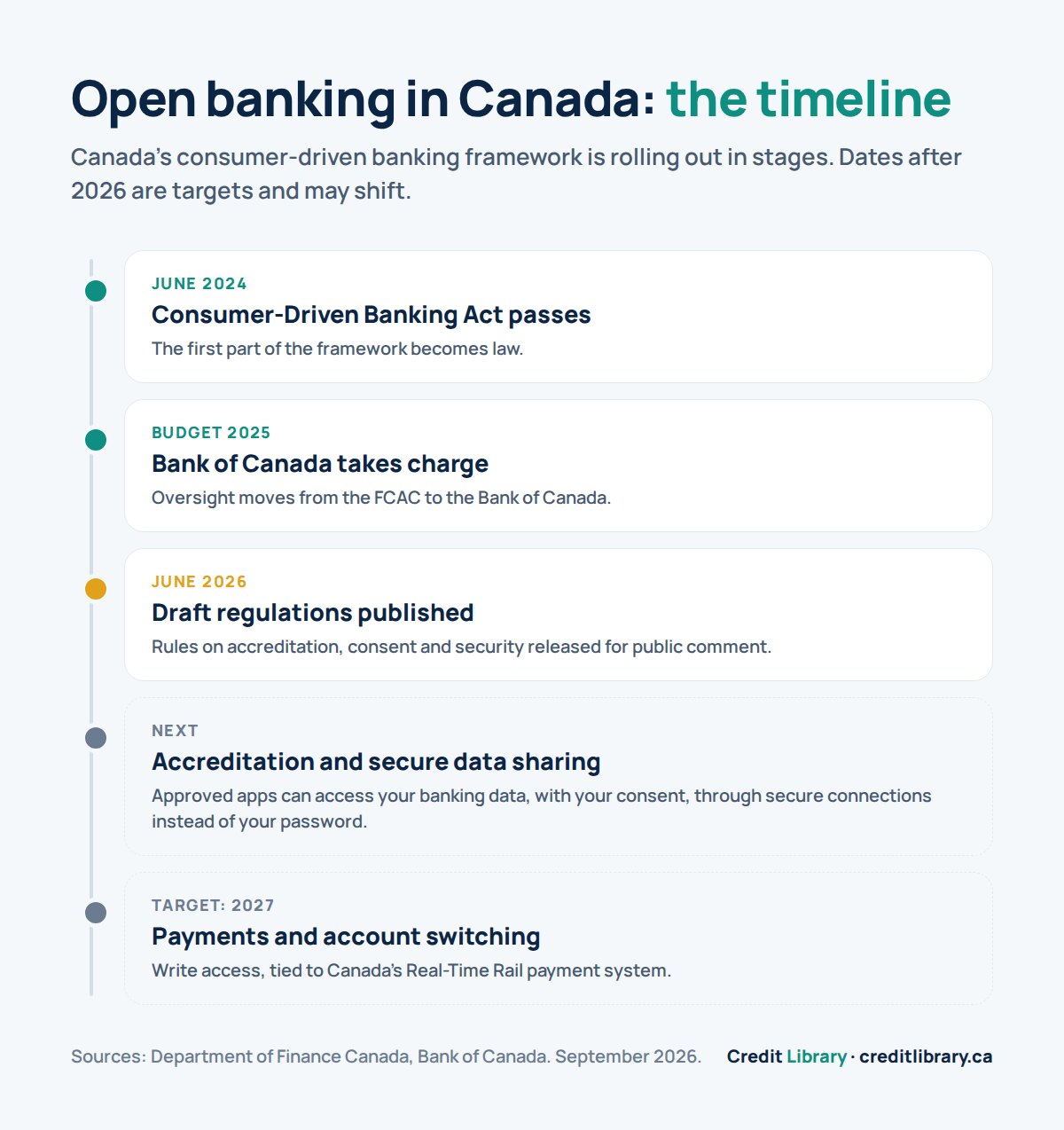
- 2024: Parliament passed the first part of the Consumer-Driven Banking Act.
- Budget 2025: the Bank of Canada took over oversight of the system from the Financial Consumer Agency of Canada.
- June 2026: Ottawa published draft Consumer-Driven Banking Regulations for public comment, covering accreditation, consent and security.
- Next: accreditation of participating companies, followed by secure data sharing (“read access”).
- Target 2027: “write access” features like starting payments and switching accounts, tied to Canada’s new Real-Time Rail payment system.
Final launch dates haven’t been locked in, so expect the rollout to happen gradually rather than all at once.
How open banking could affect your credit
Your Equifax and TransUnion credit scores aren’t going away. Open banking doesn’t change how those scores are calculated. What it changes is what else a lender can see, if you choose to share it.
- Cash-flow underwriting: lenders could look at your actual income deposits, spending and savings patterns, not just your credit report.
- Help for thin credit files: newcomers, students and young adults with steady income but little credit history may find it easier to get approved.
- Proof of bill payments: a history of paying rent, phone and utility bills on time could count in your favour, even if those bills aren’t on your credit report.
- Faster applications: income verification could happen in minutes, instead of emailing pay stubs and bank statements.
The federal government expects better access to credit for underserved borrowers to be one of the main benefits, part of an estimated $13.2 billion in benefits over 10 years.
Is open banking safe?
The new framework adds protections that don’t exist with screen scraping today:
- Accreditation: companies must be approved and listed in a public registry kept by the Bank of Canada.
- Your consent, your control: you choose what to share, with whom and for what purpose. Consent lasts up to 12 months before it must be renewed, and you can revoke it.
- Security standards: participants must meet baseline security requirements and use multi-factor authentication before data is shared.
- No password sharing: data flows through secure connections, so you don’t hand your banking login to a third party.
How to get ready for open banking
Prepare your finances
Know your credit file
Check your Equifax and TransUnion reports so you know what lenders see today. Here’s how to check for free.
Tidy up your bank account
Avoid overdrafts and NSF fees in the months before a big application, since lenders may soon see them.
Build traditional credit too
Open banking will add to, not replace, your credit history. Our guide to building credit from scratch still applies.
Stop sharing passwords
Once accredited options are available, move away from apps that ask for your online banking login.
If you rent, you don’t have to wait for open banking to get credit for your payments. Rent reporting can already add your rent history to your credit file.
Frequently asked questions
What is open banking in Canada?
Open banking, officially called consumer-driven banking in Canada, is a framework that lets you securely share your banking data with accredited apps and lenders of your choice, through secure connections instead of handing over your online banking password.
When does open banking start in Canada?
It’s rolling out in stages. The Consumer-Driven Banking Act was passed in 2024, the Bank of Canada now oversees the system, and draft regulations were published in June 2026. Accreditation and secure data sharing come next, with payment features targeted for 2027. Final dates are still being set.
Will open banking affect my credit score?
Not directly. Your Equifax and TransUnion credit scores are still based on what’s in your credit reports. What changes is that lenders may also look at your banking data, like income and bill payments, when you apply, which can help if your credit history is thin.
Is open banking safe?
The framework is designed to be safer than today’s common practice of sharing your banking password with apps. Participating companies must be accredited, meet security standards, use multi-factor authentication and get your consent, which lasts up to 12 months before it must be renewed.
Do I have to use open banking?
No. It’s entirely your choice. You decide whether to share your data, who gets it and for what, and you can revoke consent at any time.
Can open banking help newcomers get credit in Canada?
That’s one of its biggest potential benefits. Newcomers often have income and a history of paying bills but little Canadian credit history. With your consent, lenders could see that banking activity and use it alongside, or instead of, a thin credit file.
This article is general information, not financial advice. Open banking rules and timelines in Canada are still being finalized and may change. Last reviewed September 2026.