Data breaches, phishing texts and identity theft have made one question more urgent than ever: can you freeze your credit in Canada? For years the answer was mostly no. Now, thanks to new provincial laws, millions of Canadians can lock their credit file for free.
Here’s how to freeze your credit in Canada, which provinces offer it, how Ontario’s new Equifax Credit Lock works, and what to do if you live somewhere a freeze isn’t available yet.
What is a credit freeze?
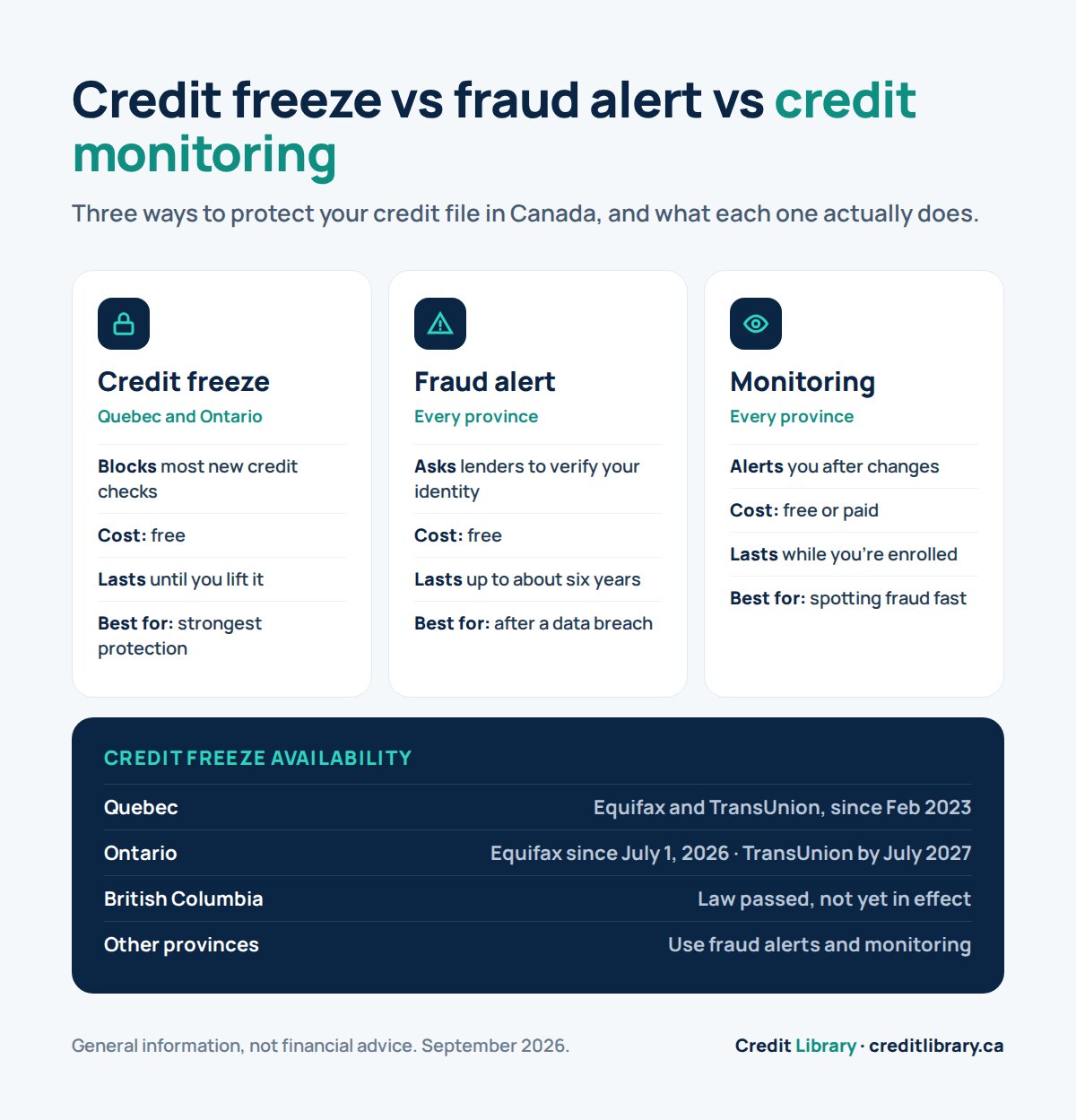
A credit freeze (also called a security freeze or credit lock) tells a credit bureau to stop sharing your credit file with most new lenders. Since almost every lender checks your credit before approving a card or loan, a freeze makes it very hard for a fraudster to open new credit in your name, even if they have your personal information.
A freeze doesn’t close your accounts, change your credit score, or stop you from using the credit you already have. You can lift it whenever you need to apply for something new.
Why credit freezes are in the news
On July 1, 2026, Ontario residents gained the right to freeze their credit file for free. Equifax Canada launched Credit Lock for Ontarians to meet the new rules under the province’s Better for Consumers, Better for Businesses Act, and TransUnion has until July 1, 2027 to offer the same.
The timing matters. According to the Department of Finance, Canadians lost more than $704 million to fraud in 2025, and only an estimated 5% to 10% of fraud is ever reported.
Where can you freeze your credit in Canada?
| Province | Credit freeze available? | Details |
|---|---|---|
| Quebec | Yes | Free with Equifax and TransUnion since February 2023 |
| Ontario | Yes (Equifax) | Free Equifax Credit Lock since July 1, 2026; TransUnion by July 1, 2027 |
| British Columbia | Not yet | Legislation has passed; start date still to come |
| All other provinces and territories | No | Use free fraud alerts and credit monitoring instead |
How to freeze your credit in Ontario
Placing an Equifax Credit Lock
Go to Equifax Canada
Sign in to (or create) a myEquifax account. You can also request a lock by phone or by mail.
Verify your identity
You’ll answer questions or provide documents so Equifax can confirm it’s really you.
Turn on the lock
Once active, most new lenders won’t be able to see your Equifax file.
Watch for TransUnion
TransUnion must offer Ontarians a freeze by July 1, 2027. Until then, consider a fraud alert with TransUnion.
In Quebec, you can request a security freeze from both Equifax and TransUnion online, by phone or by mail.
What a credit freeze does and doesn’t do
- Blocks: most new credit applications, like credit cards, loans, lines of credit and mortgages, from pulling your file.
- Doesn’t block: your existing lenders reviewing your accounts, soft checks, or certain government agencies and collection agencies.
- Doesn’t stop fraud on existing accounts. If someone steals your credit card number, a freeze won’t help. Watch your statements closely.
- Doesn’t affect your credit score. Placing, lifting or suspending a freeze has no impact on your score.
No freeze in your province? Do this instead
If you live outside Quebec and Ontario, you still have solid options:
- Place a fraud alert with both Equifax and TransUnion. It’s free and asks lenders to verify your identity (often by calling you) before approving new credit.
- Check your credit reports regularly. Look for accounts or inquiries you don’t recognize. Here’s how to check your credit report for free.
- Turn on alerts from your bank and card issuers so you hear about transactions right away.
- Protect your SIN. Only share it when legally required, like with your employer or for tax slips.
What to do if you’re a victim of identity theft
Frequently asked questions
Can you freeze your credit in Canada?
Yes, in some provinces. Quebec residents can freeze their credit with both Equifax and TransUnion. Ontario residents can lock their Equifax credit file for free as of July 1, 2026, with TransUnion required to follow by July 2027. British Columbia has passed a law, but it isn’t in effect yet. Everywhere else, you can use free fraud alerts and credit monitoring.
Is a credit freeze free in Ontario?
Yes. Under Ontario’s new rules, placing, lifting and temporarily suspending a credit freeze is free.
Does freezing your credit hurt your credit score?
No. A credit freeze doesn’t affect your credit score, and your existing accounts keep working normally. It simply stops most new lenders from pulling your file while it’s in place.
How do I lift a credit freeze to apply for a loan or credit card?
Log in to the credit bureau’s website, call, or write to them and ask to lift or temporarily suspend the freeze. Ask the lender which bureau they use, lift the freeze with that bureau before you apply, and turn it back on once you’re approved.
What’s the difference between a credit freeze and a fraud alert?
A freeze blocks most new credit checks on your file. A fraud alert doesn’t block anything; it adds a note asking lenders to verify your identity before approving credit. Fraud alerts are available across Canada, while freezes are only available in some provinces.
Should I freeze my credit after a data breach?
If you live in Quebec or Ontario and don’t plan to apply for new credit soon, a freeze is one of the strongest steps you can take. Outside those provinces, place a fraud alert with both Equifax and TransUnion and check your credit reports regularly.
This article is general information, not legal or financial advice. Credit freeze rules vary by province and are changing; check with Equifax and TransUnion for current options where you live. Last reviewed September 2026.