It’s one of the most common credit worries: does checking your credit score lower it? In Canada, the answer depends on who’s checking and why. There are two kinds of credit checks, hard and soft, and only one of them can nudge your score down.
Knowing the difference matters more than usual in 2026. The Bank of Canada estimates that about 60% of all outstanding mortgages renew in 2025 or 2026, which means a lot of Canadians are shopping for rates, loans and refinancing right now. Here’s what triggers each type of check, how long inquiries stay on your report and how to shop around without hurting your credit.
The short answer
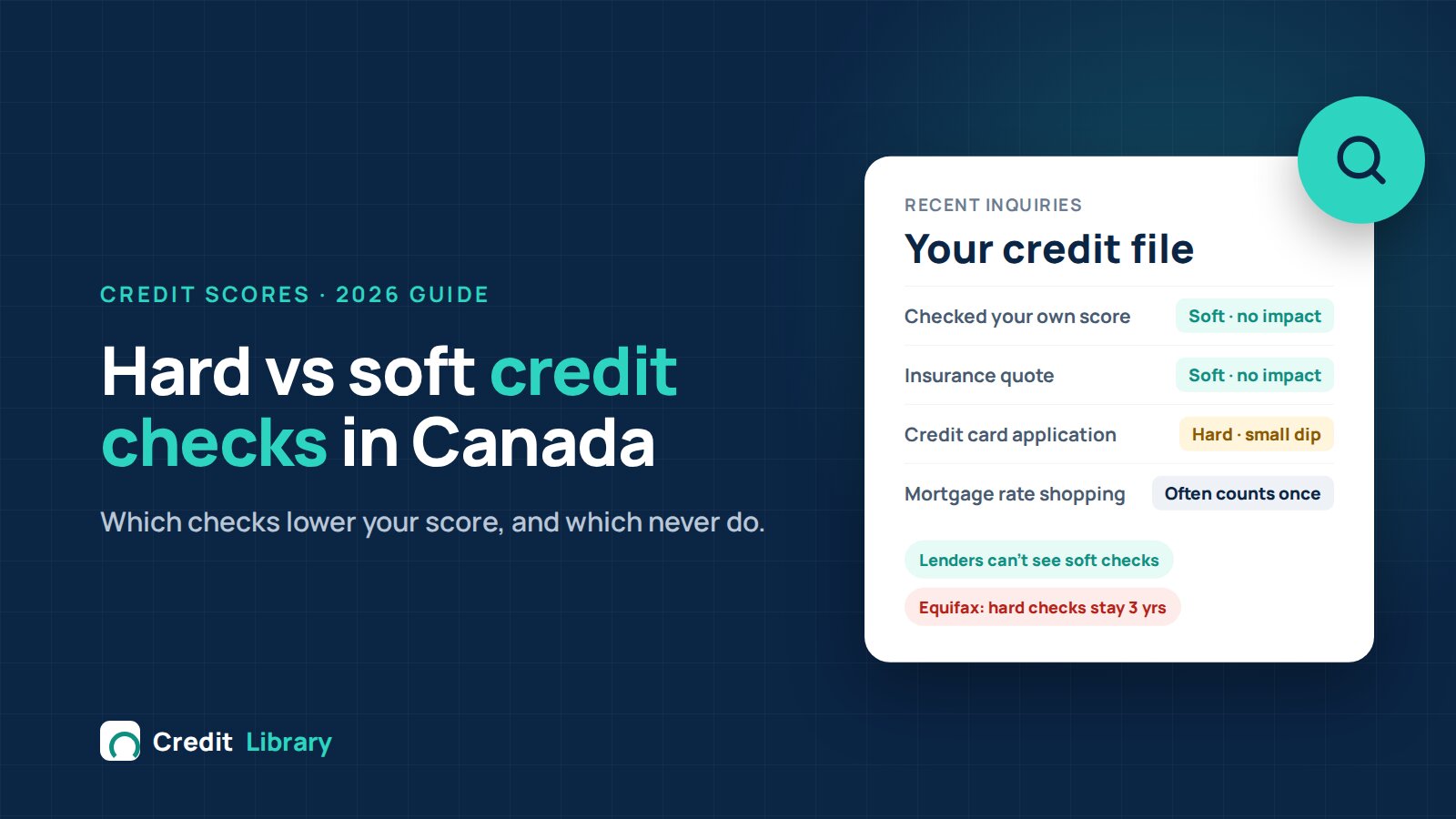
No, checking your own credit never lowers your score. That’s a soft inquiry, and the Financial Consumer Agency of Canada (FCAC) says soft inquiries don’t affect your credit score. A hard inquiry happens when a lender checks your credit because you applied for credit, like a credit card, loan or mortgage. Hard inquiries can lower your score slightly and stay on your Equifax report for up to 3 years.
What is a hard credit check?
A hard inquiry (or “hard hit”) is recorded when a lender reviews your credit report as part of an application for new credit. According to Equifax Canada, hard inquiries act as a timeline of when you’ve applied for credit, and they usually affect your credit scores.
The FCAC lists these common examples of hard inquiries:
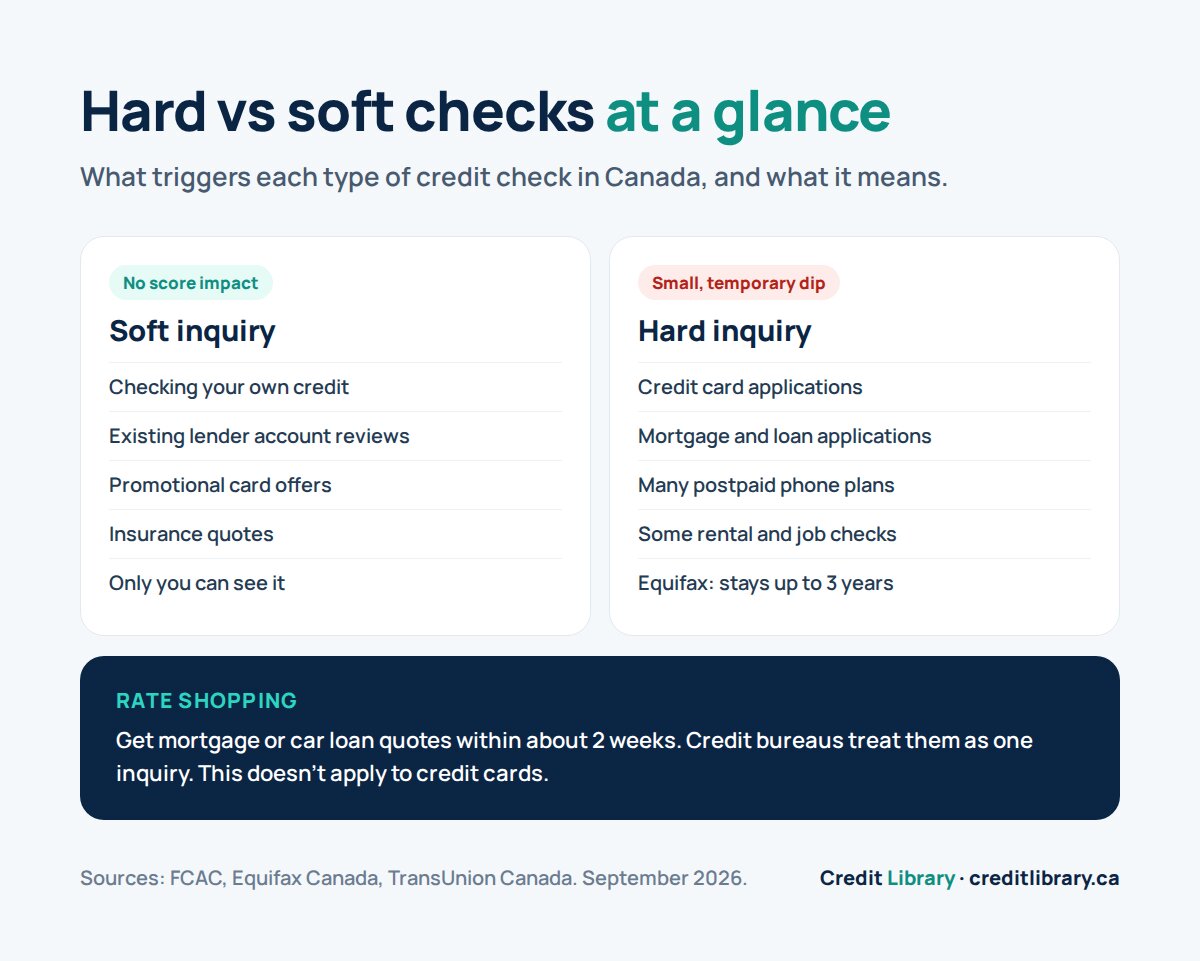
- Credit card applications
- Mortgage applications
- Loan and line of credit applications, including car loans
- Some rental applications
- Some employment applications
Lenders see your hard inquiries when they pull your report. One or two over a year is normal. Many in a short time can suggest you’re taking on a lot of new debt, which is why they carry weight.
What is a soft credit check?
A soft inquiry only shows up on the version of your report that you see. Other lenders can’t see it, and it doesn’t affect your score. Soft inquiries include:
- Checking your own credit report or score, whether directly with a bureau, through your bank or with a free credit app
- Your existing lenders reviewing your accounts. TransUnion says these account review inquiries report for one year (two years in Quebec)
- Promotional or pre-selected credit card offers, according to Equifax
- Insurance quotes. TransUnion treats an insurance company’s inquiry as a non-credit, soft inquiry
Hard vs soft: common credit checks compared
| Situation | Usually hard or soft? | Affects your score? |
|---|---|---|
| Checking your own credit | Soft | No |
| Applying for a credit card | Hard | Yes, slightly |
| Applying for a mortgage or car loan | Hard | Yes, but shopping in a short window often counts once |
| Mortgage pre-approval | Often hard; some online pre-approvals are soft | Depends on the lender |
| Existing lender reviewing your account | Soft | No |
| Insurance quote | Soft | No |
| Rental or job application | Can be either | Only if it’s a hard check |
| New postpaid phone plan | Often hard | Yes, slightly |
How long do hard inquiries stay on your credit report?
The two bureaus keep them for different lengths of time:
- Equifax: hard inquiries may remain on your Equifax credit report for 3 years.
- TransUnion: its FAQ says an inquiry by a business is automatically removed from your file after six years.
Their effect on your score doesn’t last nearly that long. An inquiry’s weight fades as it ages, especially if you keep paying on time. Think of the retention period as how long lenders can see the record, not how long it drags your score down.
How many points does a hard inquiry cost?
Neither Equifax nor TransUnion publishes a set number, and the impact depends on the rest of your credit file. A thin file (a newer credit history) tends to feel it more than a long, established one. For context, FICO says new credit makes up about 10% of a FICO Score and calls its effect relatively modest. Phone plans are similar: Ratehub notes that a carrier’s hard check could affect your score, but only slightly.
The bigger risk is stacking several applications close together, like applying for three credit cards in a month. That can add up and make lenders cautious.
Rate shopping for a mortgage or car loan
You shouldn’t have to pick a lender blind to protect your score. Credit scoring models give rate shoppers a break. The FCAC advises getting quotes for a car loan or mortgage from different lenders within a 2-week period, which the credit bureaus treat as one inquiry. Equifax explains the window can range from 14 to 45 days depending on the scoring model.
On pre-approvals: RBC, for example, says a pre-approval credit check is typically a hard inquiry, but its online pre-approval uses a soft check. Policies vary, so ask each lender which kind of check they use before you give consent.
Landlords, employers, insurers and phone companies
Plenty of businesses besides lenders may ask to check your credit. In most provinces, an organization needs your consent before it pulls your report. In Nova Scotia, Prince Edward Island and Saskatchewan, it only has to notify you.
- Landlords: some rental checks are hard inquiries. Ask what they use, and consider bringing your own recent report.
- Employers: some employment checks are hard inquiries too. It’s fair to ask why they need it.
- Insurers: a soft inquiry, according to TransUnion, so it won’t affect your score.
- Phone and internet companies: most carriers run a hard check for new postpaid customers, especially if you finance a phone.
How to see your inquiries and dispute ones you don’t recognize
Both Equifax and TransUnion let you view your credit report for free, and each has an inquiries section listing who checked your credit and when. The version you see includes soft inquiries that lenders can’t see. Here’s how to check your credit report for free.
How to handle an inquiry you didn’t authorize
Pull both reports
Check your Equifax and TransUnion reports. An inquiry may appear on one and not the other.
Contact the business
TransUnion suggests contacting the company directly to find out what authorization it had. Contact details are usually on your report.
File a dispute
If the inquiry is wrong, you have the right to dispute it with each bureau that shows it.
Watch for identity theft
An inquiry or account you don’t recognize can mean someone applied for credit in your name. Report fraud to the Canadian Anti-Fraud Centre and consider a fraud alert, or a credit freeze if your province offers one.
How to keep hard inquiries from hurting your score
- Apply for new credit only when you need it, and space applications out.
- Use pre-qualification tools that promise a soft check before you formally apply.
- Do your mortgage or car loan rate shopping within about two weeks.
- Keep paying on time and keep balances low. Your credit utilization and payment history matter far more than a single inquiry.
Frequently asked questions
Does checking your own credit score lower it in Canada?
No. Checking your own credit report or score is a soft inquiry, and the Financial Consumer Agency of Canada confirms it doesn’t affect your score. You can check as often as you like through Equifax, TransUnion, your bank or a free credit app.
How many points does a hard inquiry take off your credit score?
Equifax and TransUnion don’t publish a fixed number, and the effect varies with the rest of your file. FICO says new credit makes up about 10% of a FICO Score, so one inquiry usually has a modest, temporary effect. Several in a short period can add up.
How long do hard inquiries stay on your credit report in Canada?
Equifax Canada says hard inquiries may remain on your Equifax report for 3 years. TransUnion Canada says inquiries from businesses are removed from its files after six years. Their effect on your score fades well before they drop off.
Is a mortgage pre-approval a hard or soft credit check?
It’s often a hard inquiry, because the lender reviews your full credit report. Some lenders now use a soft check for online pre-approvals, so ask before you apply. Rate shopping within a short window is usually counted as a single inquiry.
Do landlords do hard credit checks in Canada?
Sometimes. The Financial Consumer Agency of Canada lists some rental applications as hard inquiries. Ask the landlord or property manager what kind of check they use, and remember they generally need your consent.
Can I remove a hard inquiry from my credit report?
Only if it’s wrong. If you didn’t authorize an inquiry, contact the business that made it and dispute it with the credit bureau. Accurate inquiries you agreed to generally stay until they age off.
This article is general information, not financial advice. Credit bureau and lender policies vary and can change; check with Equifax, TransUnion and your lender for your situation. Last reviewed September 2026.