If your mortgage is up this year, you’re not alone, and you’re probably wondering: does your credit score matter when you renew your mortgage? In May 2026, the Bank of Canada said the last of the five-year fixed mortgages taken out during the pandemic will renew over the next 12 months, and those borrowers face payments about 15% higher on average.
The good news: renewing is usually much easier than getting your first mortgage. But your credit still matters, especially if you want to switch lenders or have missed payments. Here’s when your credit is checked, what changed with the stress test, and how to prepare.
The short answer
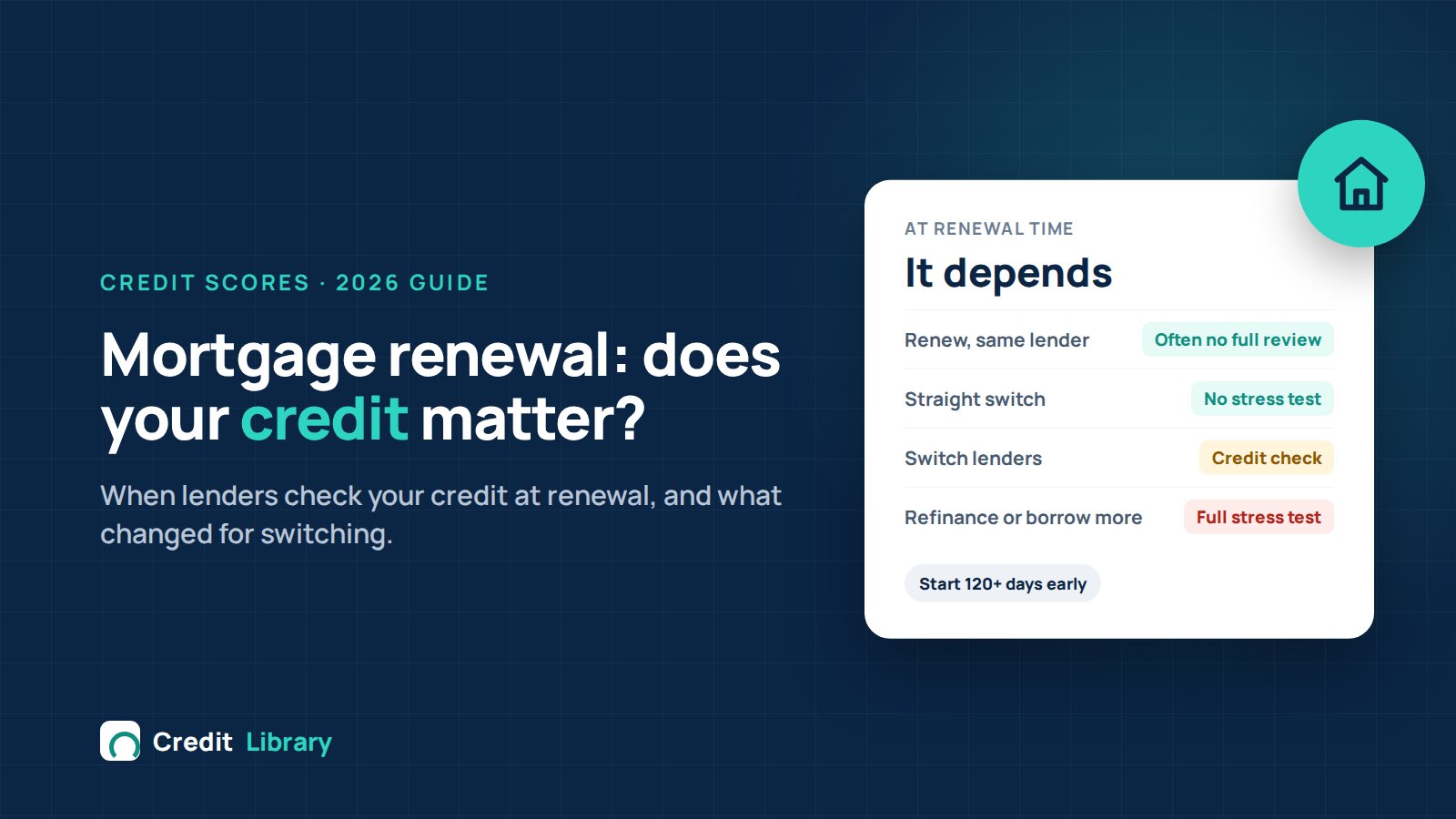
If you renew with your current lender and keep the same balance and amortization, you usually don’t have to requalify, and many borrowers renew without a full credit review. If you switch lenders, the new lender will assess you like a new application, including a credit check, although a straight switch no longer requires the mortgage stress test. Missed payments are the biggest credit risk at renewal, whichever route you take.
The 2026 renewal wave in numbers
A Bank of Canada analysis estimated that about 60% of all outstanding mortgages would renew in 2025 or 2026, including many five-year fixed mortgages taken out during the pandemic at lower rates. The Bank’s policy rate is now 2.25%, after it held rates on September 2, 2026.
According to CMHC, arrears remain low by historical standards, but the national 90-day delinquency rate rose to 0.24% at the end of 2025, and Ontario delinquencies were up 35% from a year earlier. Lenders are paying close attention to borrowers who are falling behind.
Renewing with your current lender: is your credit checked?
Staying put is the simplest option. Your lender already holds your mortgage, so it usually doesn’t ask you to requalify on income and debt ratios the way it did when you bought. If you keep the same balance and remaining amortization, many lenders simply send a renewal statement with the rate and term options.
That said, there’s no rule that stops your lender from looking. Some lenders review your credit report or your payment history on the mortgage before offering renewal terms, and practices vary. A clean payment record usually means a routine renewal. A record of missed payments, collections or new debts can mean tougher terms, or in rare cases, a refusal to renew.
Switching lenders: where your credit matters most
If you move your mortgage to a new lender at renewal, you’re applying for a new loan. The new lender will pull your credit report (usually a hard inquiry), confirm your income and review your property. FCAC notes that a new lender may use different criteria than your original lender to decide if you qualify, and you may face discharge, registration, appraisal or legal costs.
What changed is the stress test. Here’s how the rules work now:
| Your situation | Stress test? | Credit check? |
|---|---|---|
| Renew with your current lender, same balance and amortization | No | Varies by lender; often no full review |
| Straight switch of an uninsured mortgage between federally regulated lenders | No, since Nov. 21, 2024 | Yes, full application |
| Switch an insured mortgage at renewal | No requalifying at the insured rate (Mortgage Charter) | Yes, full application |
| Refinance, borrow more or extend your amortization | Yes, treated as a new loan | Yes |
A “straight switch” means moving the same mortgage to a new lender with no increase in the loan amount or remaining amortization, apart from up to $3,000 to cover switching costs. The federal government applied the same approach to low-ratio mortgages that switch from a federally regulated lender in December 2024. Rules at provincially regulated lenders, like many credit unions, can differ, so ask.
The stress test exemption helps, but it doesn’t replace a credit review. If your score has dropped since you bought, a new lender may offer a higher rate or turn you down. See what credit score you need for a mortgage in Canada for typical lender benchmarks, and how hard and soft credit checks work.
Missed payments and renewal risk
Your payment history is the one thing that can turn a routine renewal into a problem. Mortgage payments that are 30 or more days late are usually reported to the credit bureaus and can stay on your report for years (here’s how late payments work and when they can be removed). Lenders generally don’t have to renew a mortgage at the end of the term, and borrowers who are turned down often end up with alternative or private lenders that charge higher rates and fees.
What the Canadian Mortgage Charter means at renewal
The Canadian Mortgage Charter sets out what the federal government expects from banks and other federally regulated lenders when borrowers are under pressure. It isn’t a law, but FCAC monitors how lenders follow it and its related guideline. Key protections include:
- Letting insured mortgage holders switch lenders at renewal without requalifying at the insured minimum qualifying rate.
- Contacting homeowners about their renewal options 4 to 6 months before renewal.
- Offering temporary amortization extensions and waiving fees and costs tied to relief measures for those at risk.
- Allowing at-risk homeowners to make lump-sum payments or sell their home without prepayment penalties.
- Not charging interest on interest when a mortgage is in negative amortization.
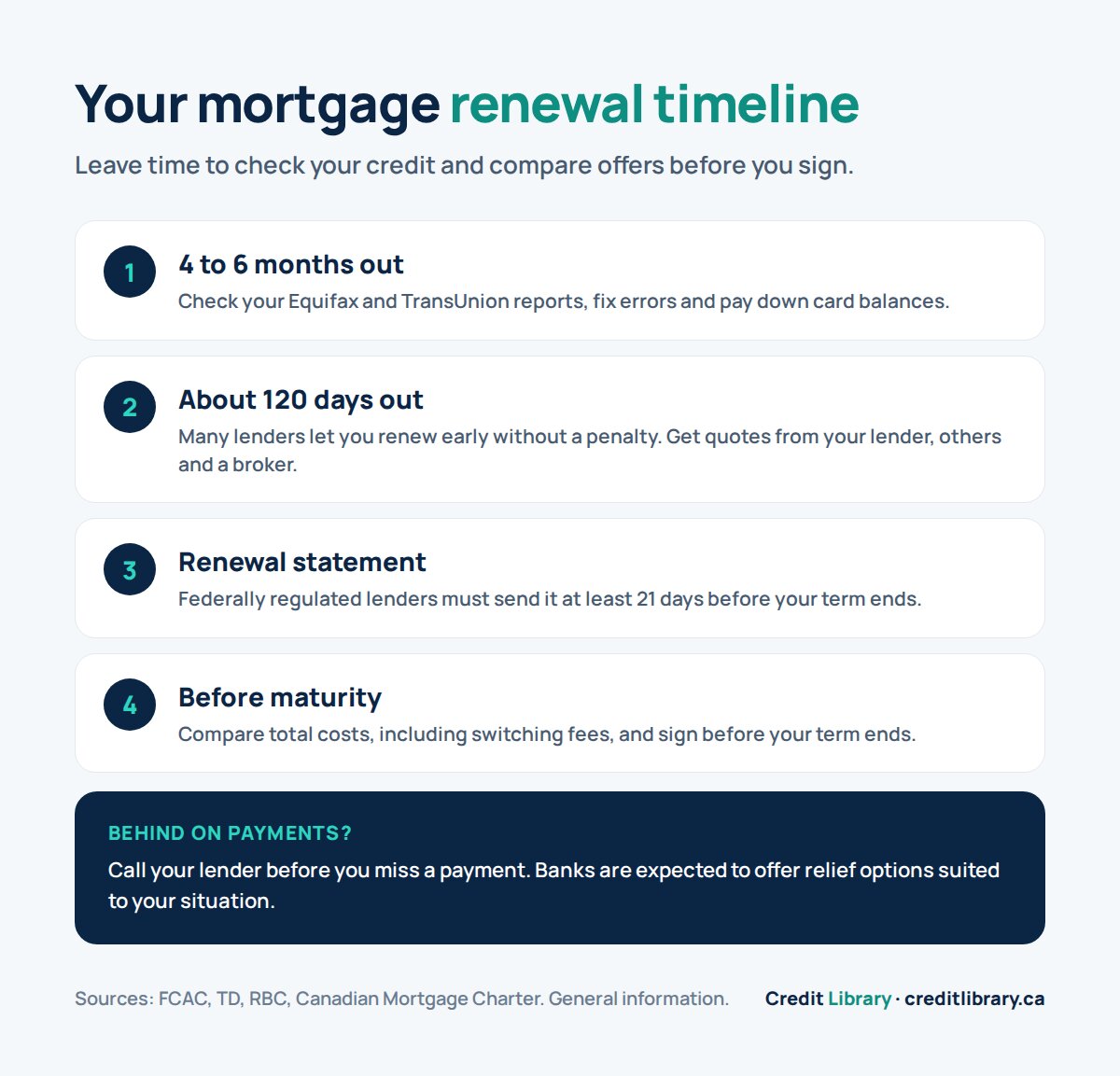
How to prepare 120+ days before renewal
Your mortgage renewal checklist
4 to 6 months out: check your credit
Pull your free Equifax and TransUnion reports and fix any errors. Here’s how to check your credit report for free.
Tidy up your balances
Paying down credit cards lowers your credit utilization, which helps if you plan to switch. Avoid applying for new loans or cards right before renewal.
About 120 days out: shop around
Many lenders, including TD and RBC, let you renew up to 120 days early without a prepayment charge. Get quotes from your lender, other lenders and a mortgage broker.
Review your renewal statement
Federally regulated lenders must send it at least 21 days before your term ends. Check the rate, term, payment and whether it will renew automatically.
Decide before maturity
Negotiate, compare the total cost including any switching fees, and sign before your term ends so you don’t roll into a short-term or open rate you didn’t choose.
Frequently asked questions
Does my bank check my credit when I renew my mortgage?
It depends on the lender. When you renew with your current lender, you usually don’t have to requalify like a new applicant, but some lenders do review your credit and payment history before offering renewal terms. Ask your lender what they check.
Can my mortgage renewal be denied because of bad credit?
It’s possible. Your lender isn’t obliged to renew your mortgage when the term ends, and missed payments, arrears or a big drop in your credit make a refusal or less favourable terms more likely. If you’re worried, talk to your lender or a mortgage professional well before your maturity date.
Do I have to pass the stress test to switch lenders at renewal?
Not for a straight switch. Since November 21, 2024, OSFI no longer requires federally regulated lenders to apply the minimum qualifying rate to uninsured straight switches, and insured mortgage holders can switch without requalifying at the insured qualifying rate. If you borrow more or extend your amortization, it’s treated as a new loan.
Does switching mortgage lenders hurt my credit score?
The new lender will usually do a hard credit check, which can lower your score by a small amount for a short time. Shopping several lenders within a short period is common for mortgages, but it’s still smart to compare rates first and only submit full applications to lenders you’re serious about.
How early can I renew my mortgage in Canada?
Many lenders let you renew about 120 days before your term ends without a prepayment charge; TD and RBC both offer this. Renewing earlier than that may trigger a penalty, so check your mortgage terms.
What happens if I do nothing at renewal?
If your lender plans to renew you automatically, it will say so in your renewal statement, which federally regulated lenders must send at least 21 days before your term ends. Letting it happen can leave you with a rate or term that doesn’t suit you, so compare options before the deadline.
This article is general information, not financial or mortgage advice. Renewal practices, fees and switching rules vary by lender and province; check with your lender or a licensed mortgage professional for your situation. Last reviewed September 2026.