If you’re new to Canada, fresh out of a consumer proposal, or just starting out, a regular credit card can be hard to get. That’s where a secured credit card comes in. So how do secured credit cards work in Canada, and will one really build your credit?
It’s a timely question. Canadians filed 145,762 consumer insolvencies in the 12 months ending June 2026, and every one of those people will eventually need to rebuild. Here’s how the deposit works, what it costs, and how to use a secured card to move up to a regular card as quickly as possible.
The short answer
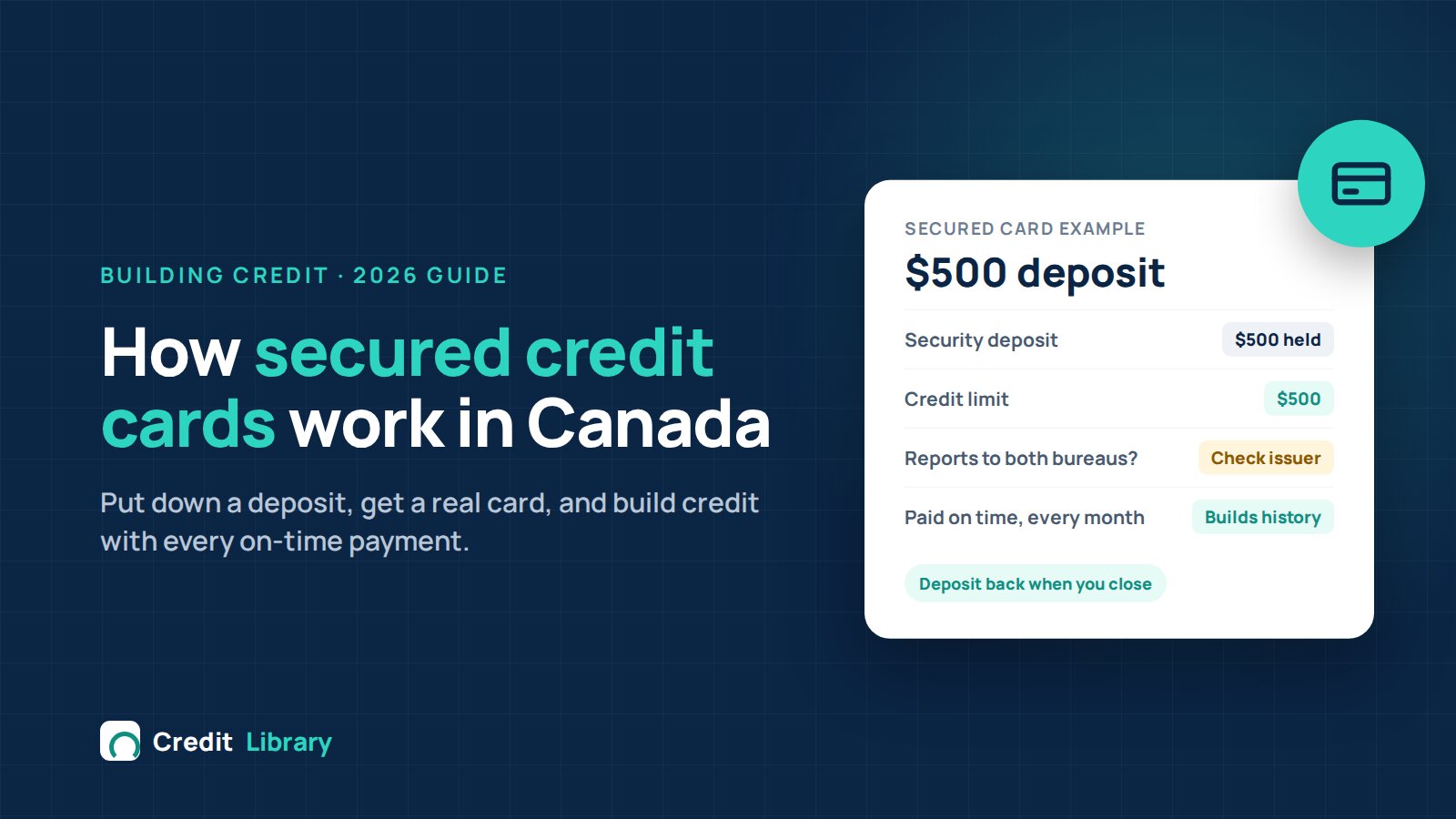
A secured credit card is a real credit card backed by a cash deposit you give the issuer. According to the Financial Consumer Agency of Canada (FCAC), your limit is usually equal to or higher than your deposit, and you get the deposit back when you close the account. If the issuer reports to Equifax and TransUnion and you pay on time, it builds your credit history just like an unsecured card.
How the security deposit works
The deposit is collateral, not a prepayment. You don’t spend it. It sits with the issuer while you use the card normally: you make purchases, get a monthly statement, and pay the bill.
- Your limit usually matches your deposit. Put down $500 and you’ll typically get a $500 limit.
- You still have to pay your bill. The deposit only gets used if you default. Missed payments are reported as late, which hurts your credit.
- It’s refundable. The FCAC explains that you need to pay off the full balance to cancel, and you get the deposit back when the account is closed.
- Deposit sizes vary a lot. Some issuers accept deposits under $100, while others require several hundred dollars or more.
For example, Home Trust accepts deposits from $500 to $10,000, while a July 2026 comparison from Neo Financial lists secured cards with minimum deposits starting at $50 or $75. Always check the current terms on the issuer’s own site.
Who secured credit cards are for
The FCAC says a secured card may make sense if you’re new to Canada, have been bankrupt, or need to rebuild your credit. In practice, that usually means:
- Newcomers with no Canadian credit file yet. Credit history from another country usually doesn’t transfer automatically, so many newcomers start from zero.
- People rebuilding after a consumer proposal, bankruptcy, collections or a string of late payments. See how a proposal and bankruptcy affect your credit.
- Students and young adults who can’t qualify for a regular card on income alone.
- Anyone who was declined for an unsecured card and wants a guaranteed-style option instead of applying again and again.
Do secured cards report to Equifax and TransUnion?
This is the most important question to ask before you apply, because a card that isn’t reported can’t build your credit. Many well-known secured cards in Canada say they report to both bureaus. Home Trust, for instance, reports your account status monthly to Equifax and TransUnion.
But it isn’t universal. Neo’s secured card originally reported only to TransUnion before adding Equifax, and Equifax notes that not every lender reports to both bureaus. Ask the issuer directly, and a couple of months after you open the card, check both of your credit reports to confirm the account shows up.
Fees and interest to watch
A secured card is cheaper than many ways to rebuild credit, but it isn’t always free. Compare these costs:
| Cost | What to know | Example |
|---|---|---|
| Annual fee | Many secured cards have none; others charge a yearly or monthly fee | Home Trust: $0 or $59 a year (source) |
| Purchase interest | Often similar to regular cards, and charged if you carry a balance | Capital One secured: 29.9% outside Quebec (source) |
| Setup fee | Some issuers charge one; the FCAC says it may not be refunded if you’re declined | Varies (FCAC) |
| Deposit | Refundable, but your money is tied up while the card is open | Varies by issuer |
If you pay your balance in full every month, the interest rate matters much less than the annual fee. If you think you’ll carry a balance, a lower-rate version (some issuers offer one for an annual fee) may cost less overall.
Secured card vs prepaid card
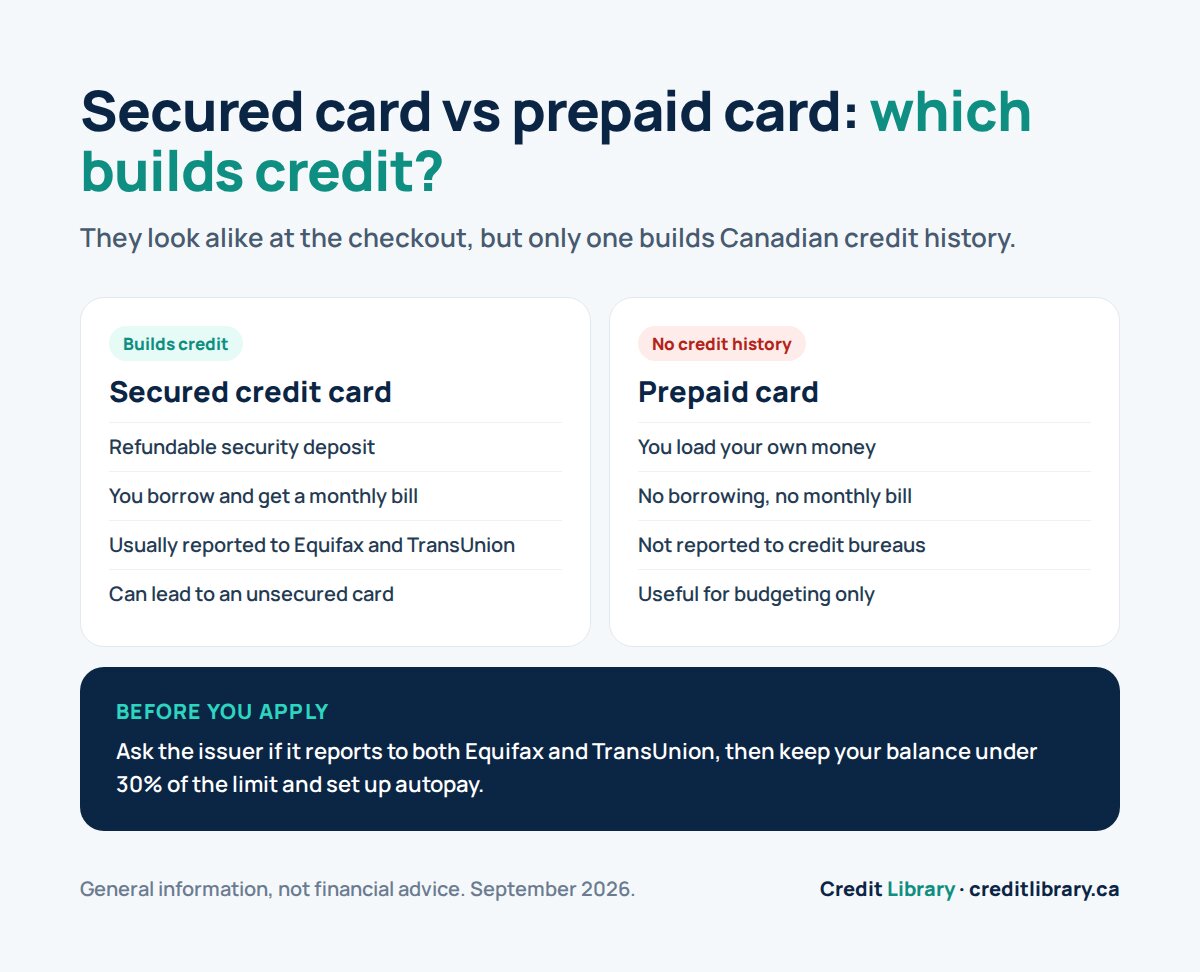
These look alike at the checkout, but only one builds credit. A prepaid card spends money you’ve loaded onto it. There’s no borrowing, so nothing is reported to the credit bureaus. A secured card is a line of credit with a deposit behind it, and the way you repay it is what shows up on your report.
| Secured credit card | Prepaid card | |
|---|---|---|
| You borrow money | Yes, up to your limit | No, you spend your own money |
| Deposit | Refundable security deposit | You load funds to spend |
| Monthly bill | Yes | No |
| Reported to credit bureaus | Usually (confirm with issuer) | No |
| Builds credit history | Yes, with on-time payments | No |
How to use a secured card to build credit
Five habits that make a secured card work
Confirm it reports to both bureaus
Ask before you apply, then check your Equifax and TransUnion reports after a couple of billing cycles.
Use it lightly every month
Put one or two regular bills on it, like a phone plan or streaming service, so there’s steady activity to report.
Keep your balance low
The FCAC suggests using less than 30% of your total limit. On a $500 limit, that’s under $150. Learn more about credit utilization.
Set up autopay
Automate at least the minimum payment so you never miss a due date, then pay the full statement balance to avoid interest.
Don’t pile on applications
Each new application usually means a hard inquiry. Here’s the difference between hard and soft credit checks.
How long until you can upgrade and get your deposit back?
There’s no single rule. Issuers set their own review timelines, and a Neo Financial guide describes a typical path of 12 to 24 months of consistent on-time payments. Some issuers review accounts and may offer to move you to an unsecured card, refunding your deposit. Others don’t graduate you automatically; money.ca notes that Capital One’s guaranteed secured card has no automatic upgrade path, so you’d apply for a new card instead.
When you’re ready, you have two ways to get your deposit back:
- Upgrade: ask your issuer whether you qualify for an unsecured card. If they agree, the deposit is typically released.
- Close it: pay the balance to zero and close the account. Before you do, consider opening your new unsecured card first, since closing your only card removes available credit and can raise your utilization.
For a broader plan, see our guide to building credit in Canada from scratch.
Frequently asked questions
Do secured credit cards build credit in Canada?
Yes, as long as the issuer reports your account to the credit bureaus. Your on-time payments and low balances are recorded like any other credit card. Most major secured cards say they report to both Equifax and TransUnion, but confirm with the issuer before you apply.
How much deposit do I need for a secured credit card?
It depends on the issuer. Some cards start with deposits under $100, while others require at least $500. Your credit limit is usually equal to your deposit, so a larger deposit gives you more room to keep your utilization low.
When do I get my secured credit card deposit back?
You get the deposit back when you close the account with a zero balance, or when the issuer moves you to an unsecured card. If you owe money when you close, the issuer can keep part of the deposit to cover it.
How long does it take to upgrade from a secured to an unsecured card?
There’s no fixed timeline. Many issuers look for about a year or more of on-time payments before offering an upgrade, and some never upgrade automatically, so you’d need to apply for a new card.
Can I get a secured credit card after bankruptcy or a consumer proposal?
Often, yes. Secured cards are designed for people rebuilding credit, and the deposit lowers the issuer’s risk. Some issuers won’t approve you while you’re still in an undischarged bankruptcy, so check the eligibility rules first.
Is a prepaid card the same as a secured credit card?
No. A prepaid card spends money you load onto it, so there’s no borrowing and nothing to report to the credit bureaus. A secured card is a real credit card: you borrow, get a bill, and your payments build credit history.
This article is general information, not financial advice. Card terms, fees, rates and credit reporting practices vary by issuer and change often; check the issuer’s current terms before you apply. Last reviewed September 2026.