In the U.S., adding someone as an authorized user is a classic way to give them a credit head start, and that advice is everywhere online. So it’s natural to ask: does being an authorized user build credit in Canada? With 89% of Canadians holding at least one credit card in 2025, according to the Bank of Canada, plenty of families are thinking about adding a partner, a teen or a newcomer to their card.
The Canadian answer is different, and getting it wrong can cost someone years of credit building. Here’s what Canadian regulators and issuers say, how authorized users compare with joint accounts and co-signers, and better ways to build credit.
The short answer
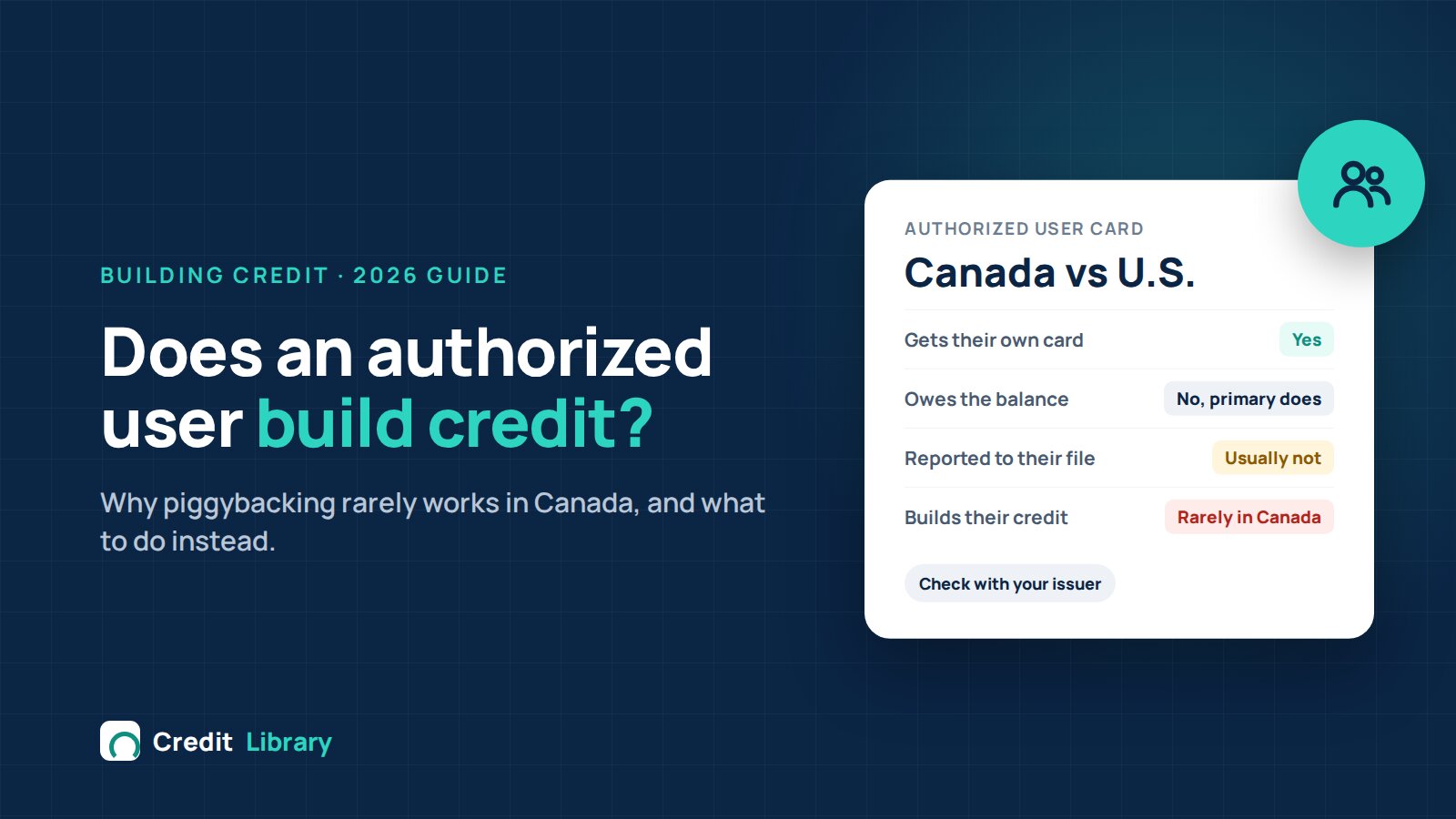
Usually no. The Financial Consumer Agency of Canada (FCAC) says purchases an additional cardholder makes won’t help them build their credit history. Scotiabank says a supplementary card isn’t reported on the supplementary cardholder’s credit report, and RBC says card activity has no impact on an authorized user’s credit bureau score.
Reporting practices can differ between issuers and can change, so if building credit is your goal, ask the issuer directly and then check the authorized user’s Equifax and TransUnion reports to see what’s actually there.
Why Canada is different from the U.S.
In the U.S., Experian says many major issuers report authorized user accounts to the credit bureaus, so the primary cardholder’s long, on-time history can show up on the authorized user’s file. That’s where the popular “piggybacking” advice comes from.
Canadian issuers generally tie credit reporting to legal responsibility. As Scotiabank explains, the supplementary cardholder isn’t responsible or liable for the account, so it isn’t part of their credit history. If you read a U.S. article suggesting you add your kids to your card to boost their scores, don’t assume it applies here.
Authorized user vs joint account vs co-signer
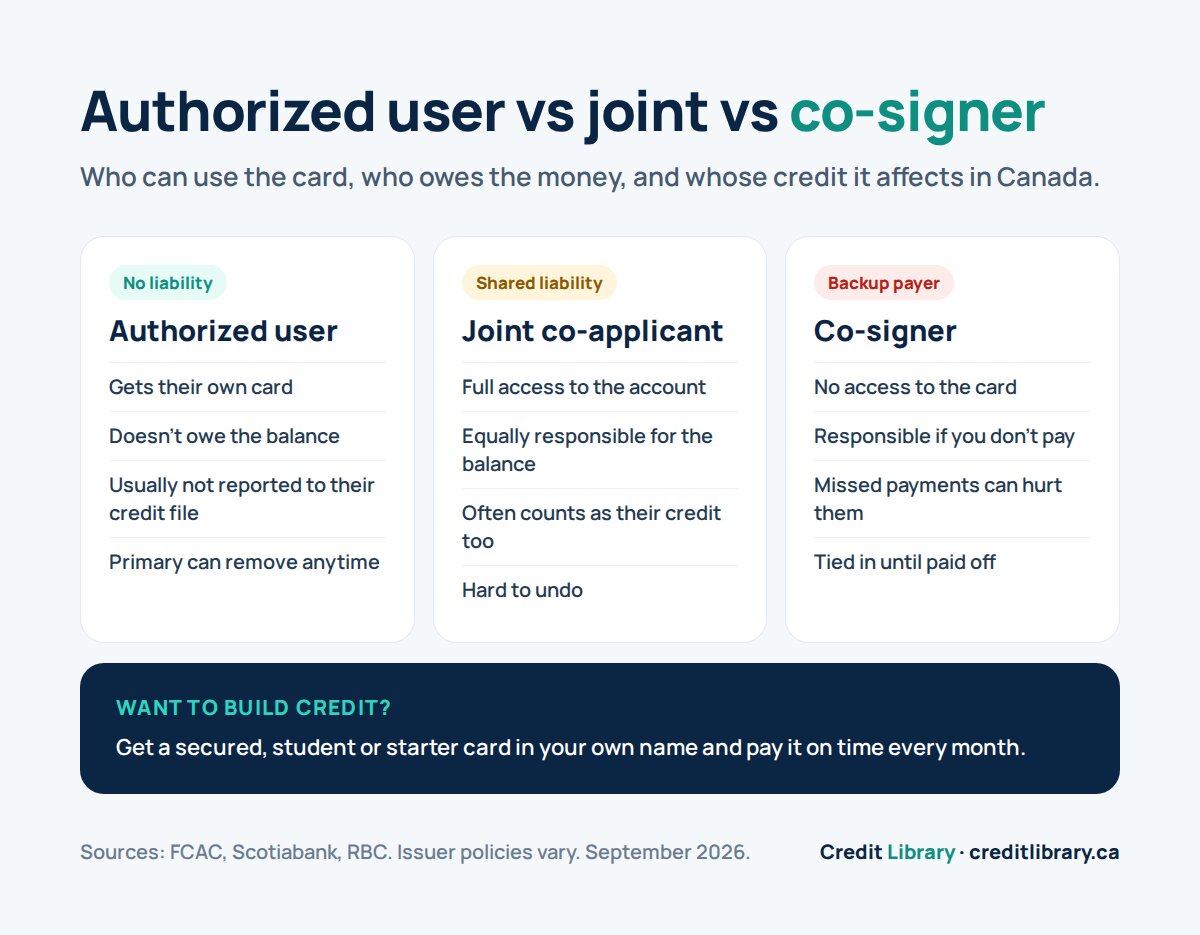
These three arrangements sound similar, but they differ on the two things that matter most: who owes the money, and whose credit it affects.
| Authorized user | Joint (co-applicant) | Co-signer (guarantor) | |
|---|---|---|---|
| Uses the card | Yes, own card | Yes, full access | No access |
| Legally owes the balance | No | Yes, equally | Yes, if you don’t pay |
| Builds their own credit | Usually not in Canada | Often, as a borrower | Can affect theirs if unpaid |
| Can be removed easily | Yes, by the primary | No, both are on the hook | Usually not until paid off |
The FCAC describes co-borrowers as having access to the account and being equally responsible for the balance, while a guarantor has no access but is still responsible for it. At RBC, for example, a co-applicant is a joint borrower and both people share the credit limit and the bill, regardless of who made the charges. Because a co-applicant is legally responsible, the account is generally treated as their credit too, but confirm with the issuer. For more on guarantees, see co-signing a loan in Canada.
What it means for the primary cardholder
Adding an authorized user is simple, but the primary cardholder carries all of the risk:
- You owe every dollar. American Express Canada notes the basic cardmember remains responsible for all charges on both cards.
- Their spending raises your utilization. Their purchases land on your balance, and a high balance relative to your limit can lower your score. See how credit utilization works.
- Late payments hit your credit, not theirs. If the bill isn’t paid on time, it’s your payment history that takes the damage.
- There may be a fee. RBC, for example, lists annual fees for authorized user cards from $0 to $99 depending on the card.
Age minimums for authorized users
You generally can’t get a credit card in your own name until you reach the age of majority in your province, but many issuers let parents add younger authorized users. Minimums vary, and some issuers set no minimum age at all.
For a teen, an authorized user card can still be useful for learning to budget, tracking spending and handling emergencies. Just don’t count on it to create a credit file.
When being an authorized user still makes sense
- Teaching money skills with a low limit and a parent reviewing the statement.
- Sharing household spending and pooling rewards on one account.
- Travel or emergencies, when a family member needs a card in their own name.
- Short-term help for newcomers while they build their own file. See building credit history after moving to Canada.
Better ways to build your own credit
Credit history is built by accounts you’re responsible for. The FCAC recommends paying on time, using less than 30% of your limit and only applying for credit when you need it. Here’s a practical path:
Build credit in your own name
Start with a card you can get
A secured credit card or a student card is often the easiest first step with no history.
Use it lightly
Put a small recurring bill on it and keep the balance well under 30% of the limit.
Pay in full, every month
Set up automatic payments so you never miss a due date.
Add other positive history
A student loan or car loan paid on time adds more history. See how student loans affect your credit.
Check your reports
Pull your free Equifax and TransUnion reports to confirm your accounts are reporting correctly.
For the full plan, see how to build credit in Canada from scratch.
Frequently asked questions
Does being an authorized user build credit in Canada?
Usually not. The Financial Consumer Agency of Canada says purchases you make as an additional cardholder won’t help you build your credit history, and major issuers like Scotiabank and RBC say the card isn’t reported on the authorized user’s credit report. Ask your issuer directly if you’re unsure.
Is an authorized user responsible for credit card debt in Canada?
No. The primary cardholder is responsible for the full balance, including everything the authorized user charges. That’s different from a joint account, where a co-applicant is equally responsible for the balance.
Does adding an authorized user affect the primary cardholder’s credit?
It can. Every purchase the authorized user makes adds to the primary cardholder’s balance, which raises their credit utilization and must be paid on time. If the balance goes unpaid, it’s the primary cardholder’s credit that suffers.
How old do you have to be to be an authorized user in Canada?
It depends on the issuer. American Express Canada allows supplementary cardmembers from age 13, and RBC allows authorized users from age 14 under its Family Card Option (18 for a standard authorized user). Other issuers set different minimums.
How do I remove an authorized user from my credit card?
Contact your card issuer by phone, online banking or the app. The FCAC notes that the primary cardholder can remove additional cardholders and authorized users at any time. Ask the issuer to cancel the user’s card number too.
What’s the best way to build credit if being an authorized user doesn’t work?
Get credit in your own name. A secured credit card, a starter or student card, or a small loan paid on time all create history that’s reported to Equifax and TransUnion. Keep balances low and never miss a payment.
This article is general information, not financial advice. Card issuer policies on authorized users, age limits and credit reporting vary and can change; check with your issuer before relying on them. Last reviewed September 2026.