Maybe it’s an annual fee you no longer want to pay, or a store card you haven’t used in years. Before you call to cancel, it’s worth asking: does closing a credit card hurt your credit score in Canada? With Canadians carrying $134.2 billion in credit card debt in the second quarter of 2026, according to Equifax Canada, losing a card’s limit can matter more than you’d expect.
The answer depends on your balances, how old the card is and why you want to close it. Here’s how closing a card affects your score, a worked example, the alternatives, and how to close a card the right way.
The short answer
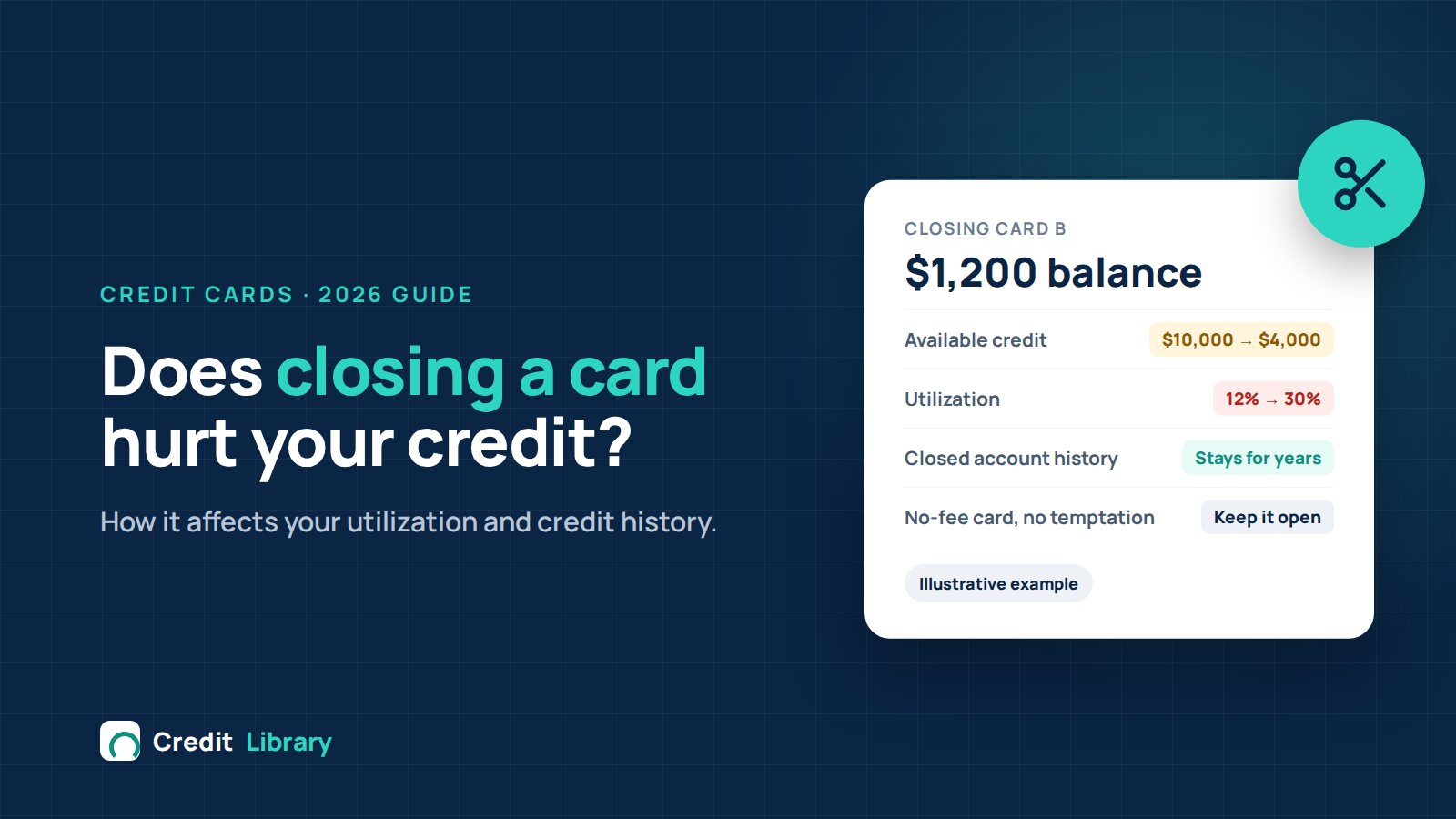
Closing a credit card can lower your credit score, mainly because it reduces your total available credit and pushes your utilization up. It doesn’t wipe out the card’s history right away: closed accounts in good standing stay on your Canadian credit report for years. If you carry no balances, the effect may be small, but the safest move is often to keep a no-fee card open.
How closing a card affects your utilization
Credit utilization is the share of your available credit that you’re using. The FCAC suggests keeping it below 30%. When you close a card, its limit disappears from the calculation, but your balances on other cards don’t change.
Here’s a simple example. Card A has a $4,000 limit and a $1,200 balance. Card B has a $6,000 limit and no balance, and it’s the one you want to close.
| Before closing Card B | After closing Card B | |
|---|---|---|
| Total credit limit | $10,000 | $4,000 |
| Total balance | $1,200 | $1,200 |
| Overall utilization | 12% | 30% |
Overall utilization, before and after closing Card B
You didn’t spend a dollar more, yet your utilization jumped from 12% to 30%. Scotiabank gives a similar example and notes that scores typically recover within a few months if you use credit responsibly. Paying down your remaining balances is the quickest way to offset the change. Our guide to credit utilization in Canada explains more.
What happens to your credit history
A common myth is that closing a card instantly erases its history. It doesn’t. The account stays on your report, marked as closed, and its payment history still counts for a while.
| Credit bureau | Closed account in good standing stays |
|---|---|
| Equifax Canada | Up to 6 years from the date it’s reported closed |
| TransUnion Canada | Up to 20 years from the last activity |
Sources: Equifax Canada and TransUnion Canada. The FCAC’s summary lists up to 10 years for closed accounts at Equifax, so check with the bureau if the timing matters to you.
The effect on your history is gradual. Once a closed account stops reporting and eventually drops off, you lose its positive history and your average account age can fall. As MoneySense points out, closing a card also won’t erase any late payments already on it.
When closing a card makes sense
Keeping every card open isn’t always the right call. Closing can be reasonable when:
- The annual fee outweighs the value. If you’re paying for perks you don’t use, and the issuer won’t waive the fee or switch you to a no-fee card.
- It’s a temptation. If an open card keeps pulling you back into debt, protecting your budget can matter more than a few points.
- You’re separating finances. A joint card after a breakup or separation can leave you responsible for someone else’s spending.
- You have too many cards to manage. A missed payment on a forgotten card does far more damage than closing it.
If the card was compromised by fraud, you usually don’t need to close the account. Report it and ask the issuer for a new card number instead.
Alternatives to closing a credit card
Downgrade or product change
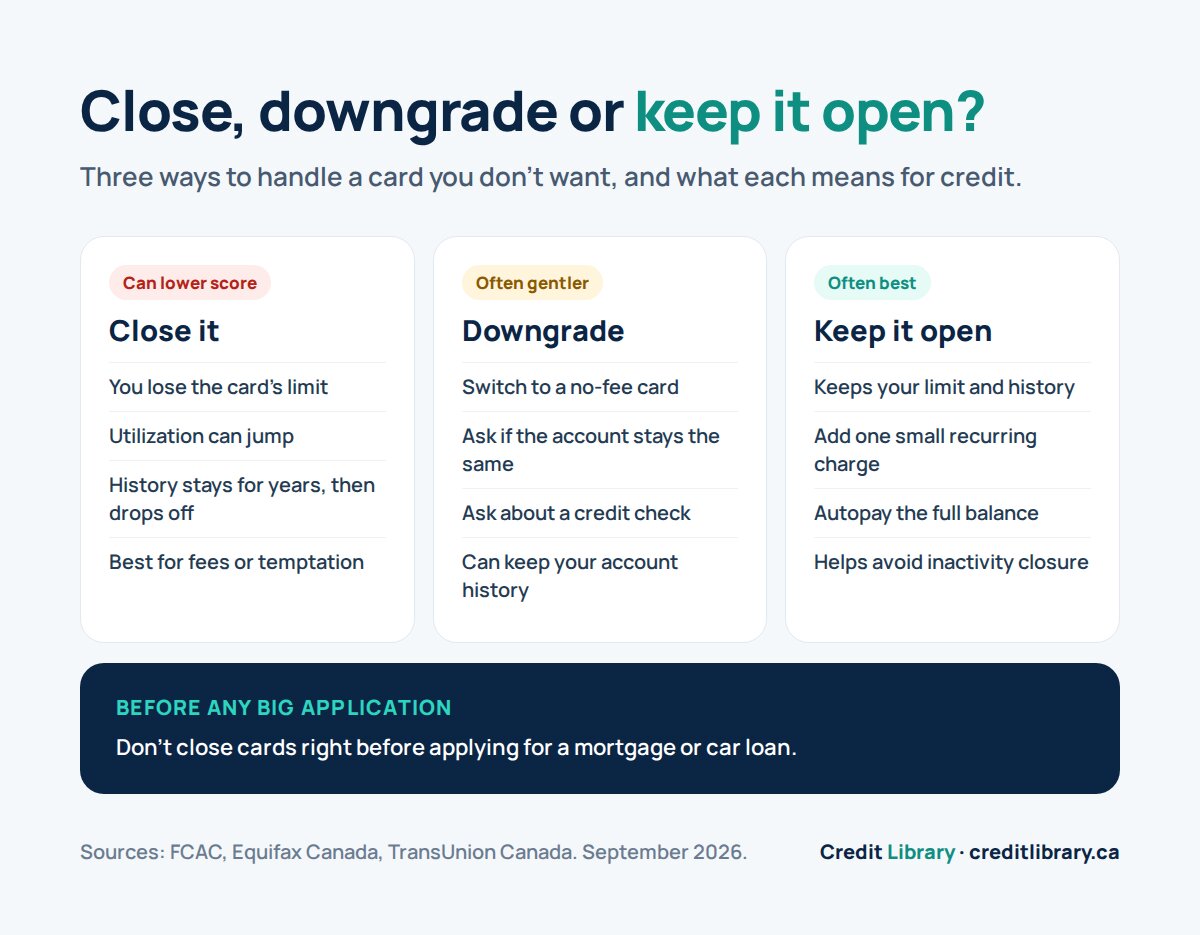
Many issuers let you switch to a different card, such as a no-fee version, with the same bank. Consolidated Credit Canada suggests asking about a fee waiver or a no-fee downgrade to keep your account history. Before you switch, ask whether it keeps the same account and whether it involves a new credit check. Our guide to hard vs soft credit checks explains the difference.
Keep it open with a small recurring charge
Put one small subscription on the card and set up automatic payment of the full balance. Consolidated Credit Canada notes that a small recurring payment may help prevent a closure for inactivity. You keep the limit and the history, and it costs you nothing extra.
Remove the temptation without closing
Store the card somewhere out of reach, remove it from your digital wallets and shopping sites, and turn on spending alerts.
How to close a credit card properly
If you’ve decided to close it, follow these steps from the FCAC and a few of our own:
How to cancel a credit card in Canada
Redeem your rewards
Points or cash back are often lost when the account closes. Use them first.
Pay off the balance
Interest keeps applying to any balance left on the account, even after it’s closed.
Move recurring payments
Contact any company that charges the card automatically and give them a new payment method.
Contact your issuer
Call or write to ask them to close the account. Cutting up the card, letting it expire or not using it doesn’t cancel it.
Get it in writing and check your report
Ask for written confirmation. Check your credit report about a month later to make sure it shows the account as closed.
Can your bank close your card for inactivity?
Yes. Issuers can close accounts, and some close cards that go unused for a long time. According to Credit Canada, the length of time varies from company to company, and you may not get a warning. Your cardholder agreement is the best place to check.
An issuer closing your card has the same effect on utilization as closing it yourself. If you want to keep an older card, use it now and then and pay it off in full. For more ways to protect your score, see how to raise your credit score fast.
Frequently asked questions
Does closing a credit card hurt your credit score in Canada?
It can. The biggest effect is usually on your credit utilization, because you lose that card’s limit. If you carry little or no balance on your other cards, the impact may be small, and scores typically recover as you keep using credit responsibly.
Is it better to close a credit card or leave it open with a zero balance?
If the card has no annual fee and you’re not tempted to overspend, leaving it open with a zero balance usually helps your utilization and keeps the account active on your report. Use it for a small purchase now and then so the issuer doesn’t close it for inactivity.
How long does a closed credit card stay on my credit report in Canada?
Equifax Canada says a closed account paid as agreed stays for up to six years from the date it’s reported closed. TransUnion says a paid account with no negative information stays for up to 20 years from the last activity.
Should I close my oldest credit card?
Usually not. Older accounts help the length of your credit history, and Equifax Canada suggests not closing paid-off accounts. If you have to close one, a newer card generally does less damage.
Does cutting up my credit card cancel it?
No. According to the FCAC, cutting up your card, letting it expire or not using it doesn’t cancel the account. You have to contact the issuer and ask for written confirmation that the account is closed.
Can my bank close my credit card without asking me?
Yes. Card issuers can close accounts, including cards that sit unused, and the timeline varies by company. A small recurring charge paid automatically each month may help keep the card active.
This article is general information, not financial advice. Card issuer policies and credit bureau practices vary; check with your issuer, Equifax and TransUnion for your situation. Last reviewed September 2026.